
Sustainable CAPE’s
Children’s Gardening Programs
In the News
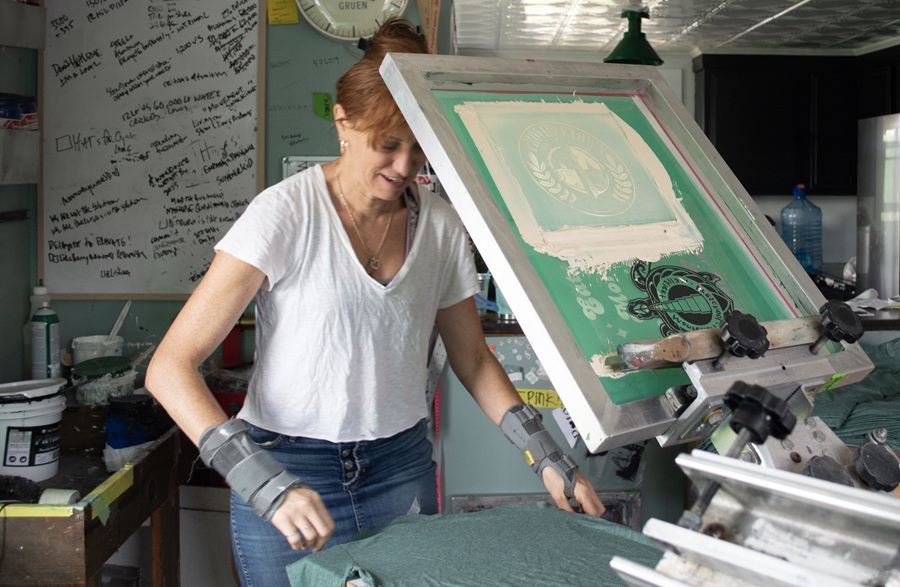
There is no doubt that Provincetown has its fair share of T-shirt shops. Walk down Commercial Street in the summertime and you’ll see shirts announcing just about every familiar local spot and event in big, bold, often rainbow lettering: Herring Cove, the Pilgrim Monument, Bear Week, Tea Dance, Pride.
Probably, most of us don’t think about the making of these shirts when we pick a favorite to bring home. We just want to remember that trip to Spiritus or our day at Race Point. Some of these shirts are printed by big companies far from Cape Cod, but others, many in fact, are printed right here on the Outer Cape. Read More . . .
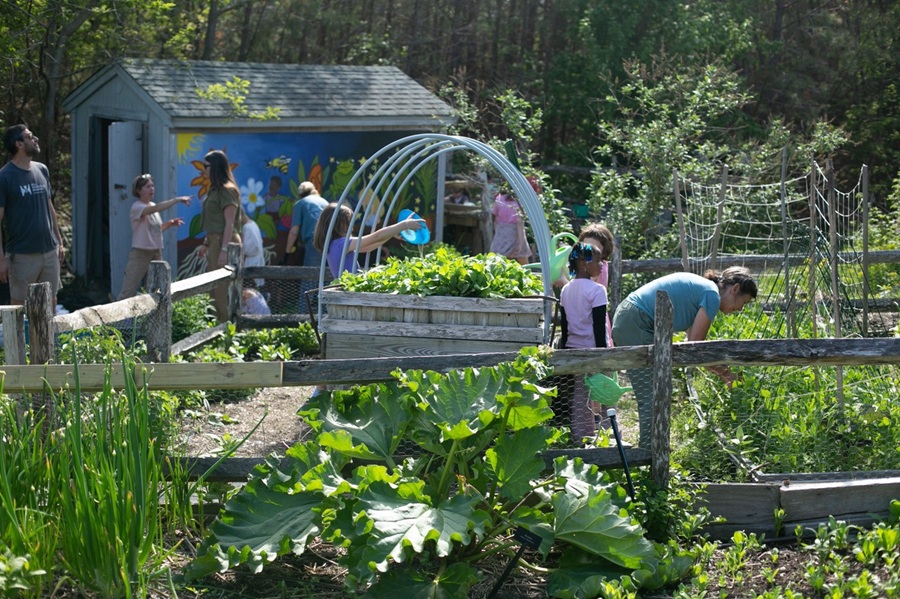
The vegetable garden outside the Truro Public Library is full of peppers, potatoes, zucchini, and winter squash, and local kids are keeping an eye on the harvest. After all, they had the library’s garden well on its way to being planted up before school was out for summer.
On a sunny May afternoon, some 20 students in the recreation dept.’s Out-of-School-Time program were ready to dig in. First, they stood in line for a smear of sunscreen. Then, they formed a circle as Truro resident and Sustainable CAPE educator Sarah Naciri guided them in a warm-up: arm swings, arm circles, wrist rolls, a side body stretch, and a quad stretch. They punctuated this series by doing frog jumps to the center of the circle. Read More. . .
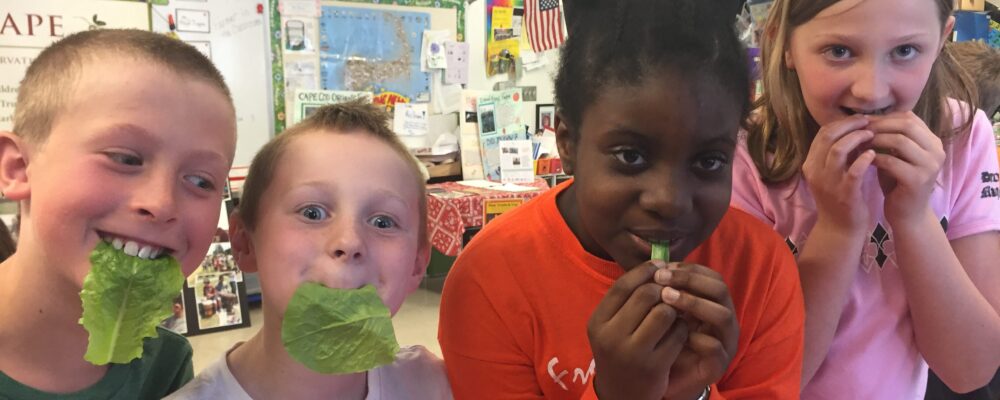
Farmer-in-the-School Program
Sustainable CAPE works with all seven elementary school from Brewster through Provincetown, teaching over 1,200 children about the benefits of growing and eating local food. We have developed an innovative model: we hire a farmer/educator to work with students, specifically linking school gardens to the classroom curriculum, a school nurse’s health & wellness curriculum, and the school lunch/snack program. Read More…
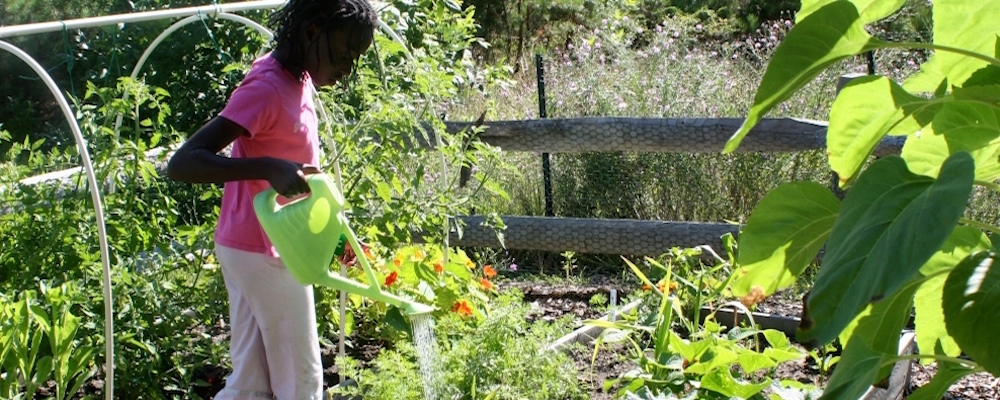
Children’s Community Garden
Sustainable CAPE’s Children’s Community Garden grows year-round organic produce with participating K-6 elementary school children. Children plant, cultivate, eat (and enjoy!) local fruits and vegetables – resulting in improved health and a formative early connection to agriculture. The young gardeners also deliver excess produce to their local school for the School Lunch Program. Read More…